
Industry News
Curation by industry experts
Hot Articles
Popular Tags
Ceramic Tableware Safety: LFGB and Food Contact Checks
Ceramic tableware safety is no longer judged by glaze shine, color consistency, or chip resistance alone. For products used in homes, restaurants, retail programs, and export channels, food contact compliance has become a core quality decision.
That is why LFGB and related food contact checks matter. They help confirm whether ceramic tableware releases unwanted substances, whether decorations remain safe in contact areas, and whether production controls match the claims made on packaging and sales documents.
Across the housewares supply chain, this topic now sits beside durability, cost, and design. On platforms such as CHHS, food-contact material compliance is discussed in the same practical way as stainless steel grades, plastic molding stability, and insulated drinkware performance.
Why ceramic tableware needs closer safety review
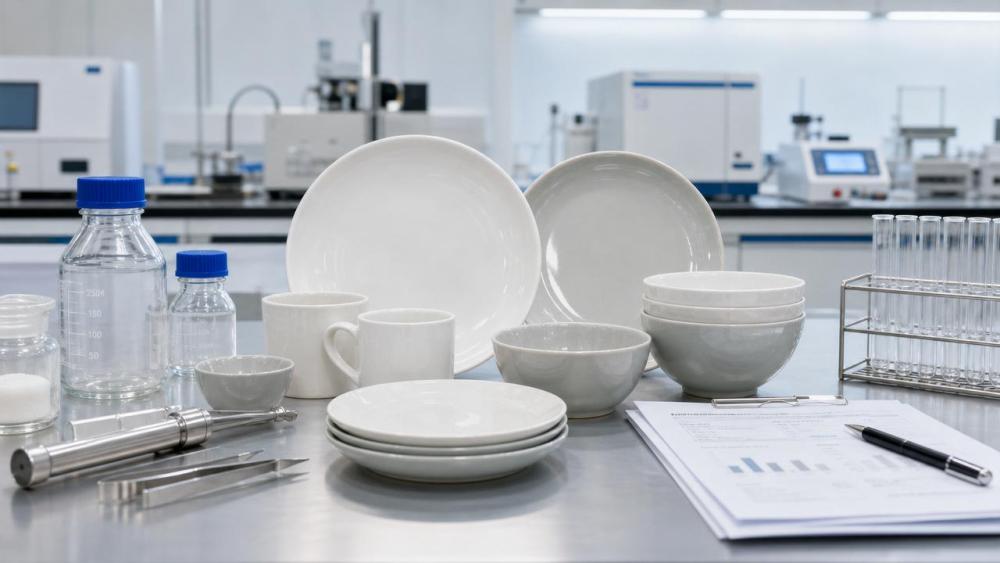
Ceramic tableware looks simple, but its safety profile depends on several layers. The ceramic body, glaze formula, pigments, decals, firing temperature, and final surface condition all influence food contact performance.
In daily use, plates, bowls, cups, and serving pieces may contact acidic foods, hot liquids, oils, detergents, and repeated washing cycles. A product that looks stable on the shelf may behave differently after real use begins.
The main concern is migration. If lead, cadmium, or other substances move from glaze or decoration into food, the issue shifts from product quality to consumer safety and market access.
This is especially relevant for decorated rims, brightly colored interiors, reactive glazes, matte finishes, and handcrafted-looking surfaces. These styles may be attractive commercially, but they often require tighter validation.
What LFGB and food contact checks really cover
LFGB is commonly associated with German food contact requirements, and in practice it signals a stricter compliance expectation in many European-facing sourcing programs. For ceramic tableware, it is not a decorative label. It is evidence-based testing.
The exact test scope depends on product type, market destination, and material construction. Even so, several review points appear again and again in ceramic tableware projects.
- Migration of lead and cadmium from ceramic surfaces
- Safety of glazes, pigments, and overglaze decorations
- Suitability of contact areas for repeated food exposure
- Consistency between tested sample and mass production
- Labeling, declarations, and supporting technical documents
A useful way to read any report is to ask a simple question: was the ceramic tableware tested as a real product, or only described in general material terms? Real compliance depends on the final article, not just raw ingredient statements.
Where risk usually appears in ceramic tableware programs
Most failures do not come from one dramatic mistake. They often come from small gaps between product design, supplier communication, and process control. That is why food contact checks should begin before shipment, not after a complaint.
Decorations and contact zones
Printed decals, metallic bands, hand-painted rims, and interior artwork need careful review. If decoration sits in a direct food contact zone, the compliance burden becomes higher.
A mug with an exterior pattern may present lower concern than a bowl with a decorated inner wall. Placement matters as much as composition.
Glaze formulation changes
Factories may change glaze suppliers, pigments, or firing settings to improve yield or color tone. Even minor adjustments can affect migration results. The approved sample and production batch must stay technically aligned.
Surface damage after use
A smooth surface at inspection does not guarantee long-term safety. Scratching, crazing, and dishwasher wear may expose weak areas. For ceramic tableware, durability and food safety often connect more closely than expected.
Key checkpoints before approving production or shipment
A practical review system works better than a document-heavy one. The goal is to identify whether the tested ceramic tableware truly represents the goods being packed, sold, and used.
In business terms, these checkpoints reduce two common problems: relying on outdated test reports and assuming that all similar-looking ceramic tableware behaves the same way.
How this affects sourcing, retail compliance, and brand risk
Ceramic tableware sits in a broad consumer housewares environment. It competes for shelf space with stainless steel, glass, plastic, and silicone products, all of which are increasingly reviewed through a compliance lens.
That wider context matters. CHHS often connects material safety topics across categories because buyers rarely assess one product in isolation. A tableware range may be reviewed together with drinkware, storage containers, or kitchen tools.
If ceramic tableware lacks solid food contact evidence, the issue can slow listing approvals, trigger retesting, delay shipments, or weaken confidence in the broader collection. Safety checks therefore protect both the item and the program around it.
For export-focused supply chains, the cost of a failed check is usually higher than the price of preventive testing. Delays, relabeling, disposal, and replacement often exceed the original laboratory budget by a wide margin.
Practical control steps that improve consistency
A strong ceramic tableware compliance routine does not need to be complicated. It needs to be repeatable, specific, and linked to the real production flow.
- Freeze glaze and decoration specifications before formal testing
- Separate food-contact and non-contact decorations in artwork approval
- Record kiln settings and major process changes by batch
- Retest when color systems, decal suppliers, or glaze sources change
- Check that reports identify the actual ceramic tableware sample clearly
- Link compliance files to packaging claims and market destination
It also helps to classify products by risk level. Plain white glazed ware often needs a different review intensity than artisan-effect pieces, metallic designs, or novelty giftware.
When a program includes several SKUs, grouping by shared glaze system and decoration process can improve efficiency. Still, grouping only works when technical equivalence is real and well documented.
What to review next when comparing suppliers or product lines
If the immediate question is whether ceramic tableware is safe, the deeper question is whether the control system behind it is trustworthy. Good reports matter, but good change management matters just as much.
The next useful step is to map each item to its glaze system, decoration position, test status, and target market. That creates a clearer basis for approval than relying on style photos or generic declarations.
From there, compare current documents against actual production practice. If a ceramic tableware line has evolved in color, finish, or supplier inputs, the compliance file should evolve with it.
In a market where housewares decisions are increasingly shaped by safety, traceability, and category-level consistency, LFGB and food contact checks are less about paperwork and more about making better release decisions with fewer surprises.
Recommended News