
Industry News
Curation by industry experts
Hot Articles
Popular Tags
How Thermal Retention Engineering Improves Vacuum Insulation
For technical evaluators, thermal retention engineering vacuum insulation is not just a material choice; it is a system-level decision that shapes temperature stability, product feel, and long-term reliability. In insulated drinkware and adjacent housewares categories, performance depends on how well the container blocks conduction, convection, and radiation while maintaining structural integrity through production and daily use.
That is why this topic matters across the CHHS ecosystem, from thermos bottles and insulated mugs to 316 stainless steel drinkware and food-safe storage products. When thermal retention engineering is done well, vacuum insulation becomes more than an empty gap between walls. It becomes a controlled design environment that supports better heat retention, fewer defects, and stronger market differentiation.
Why thermal retention engineering changes the result
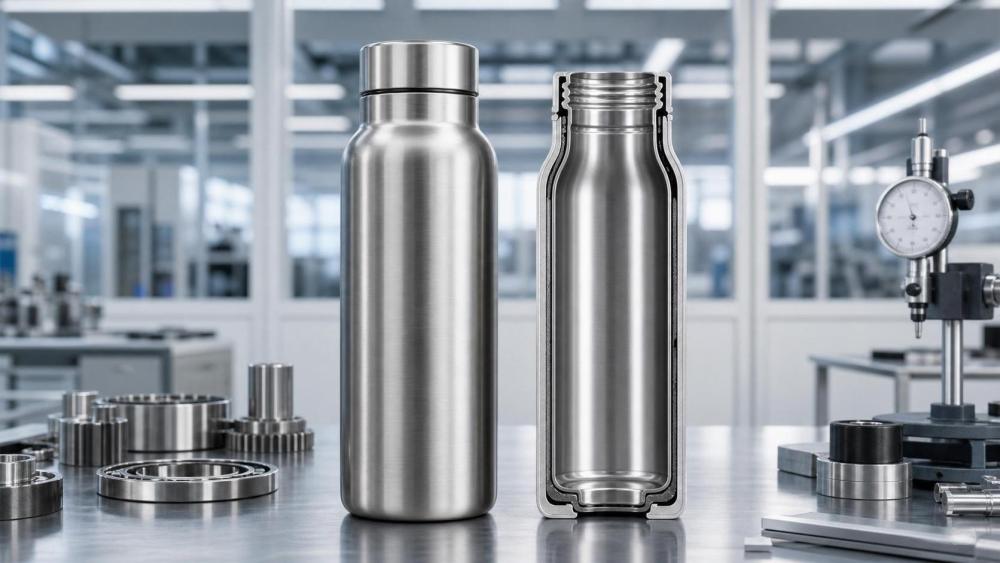
At a basic level, vacuum insulation works because a low-pressure space reduces heat transfer. But the real performance gap appears in the engineering around that vacuum. Wall geometry, seam quality, neck structure, liner finish, and closure design all influence how long hot or cold contents stay stable.
Thermal retention engineering vacuum insulation focuses on those details. It asks how the product handles thermal bridges, how the vacuum cavity resists collapse, and how the liner surface controls energy loss. In practice, this is where two products with similar materials can perform very differently.
For drinkware brands and sourcing teams, that difference affects more than temperature claims. It influences return rates, user satisfaction, and whether a design can hold up under certification, shipping, and repeated cleaning.
What sits inside the structure
A vacuum insulated vessel usually combines two metal walls, a sealed cavity, and a carefully formed mouth or neck. Thermal retention engineering improves each layer by reducing conductive paths and making the vacuum stable enough to last through real-world use.
Liner materials matter because they define both safety and heat behavior. Stainless steel grades, internal polishing, and surface treatments can change how quickly heat moves and how easily residues clean off. In many cases, copper plating or selective coating is used to reduce radiative transfer, especially in premium thermal retention engineering vacuum insulation designs.
The seal area deserves equal attention. A weak weld, inconsistent crimp, or poorly controlled closure can create a slow leak that gradually destroys performance. That is why the best designs treat vacuum integrity as a manufacturing capability, not just a final inspection point.
Heat transfer is the real target
Insulation is often described as “keeping heat in,” but the engineering goal is more specific. It is about managing conduction through metal, convection in trapped gas, and radiation across reflective surfaces. Thermal retention engineering vacuum insulation improves each path in a different way.
- Conduction is reduced through thin contact zones and controlled wall thickness.
- Convection is minimized by removing air from the cavity.
- Radiation is lowered through polished or coated internal surfaces.
When these paths are managed together, retention becomes more predictable across different fill temperatures and ambient conditions.
Why the topic is getting more attention
The market has moved beyond simple “hot for hours” claims. Buyers now compare actual retention curves, condensation behavior, and material transparency. That shift is visible in categories that CHHS covers closely, including insulated mugs, thermos bottles, and premium stainless steel drinkware.
At the same time, compliance expectations have become more demanding. LFGB testing, FDA food-contact review, and material traceability all influence product selection. A design that performs well but cannot pass documentation checks loses value quickly in export and private-label channels.
This is also where thermal retention engineering vacuum insulation connects with production economics. Better design can reduce scrap from distortion, weak welds, and vacuum failures. That matters in mass production, where small structural improvements can protect margin more effectively than cosmetic upgrades.
How it shows up in real products
In insulated drinkware, the design target is usually a stable balance between retention time, weight, and usability. A heavier wall may improve durability, but if it creates a thermal bridge, the retention advantage can shrink. A highly polished liner can reduce radiation loss, but only if the vacuum seal remains intact.
In food-contact storage or multi-use housewares, the same logic applies in a different form. Products must resist deformation, remain easy to clean, and avoid material issues that compromise safety or odor control. Thermal retention engineering vacuum insulation supports this by reducing uncontrolled temperature exchange and improving structural consistency.
For procurement and development review, this means looking past headline performance. The useful questions are whether the vacuum level is stable, whether the liner finish is consistent, and whether the design can survive repeated use without losing efficiency.
Where design and supply chain meet
Thermal retention engineering vacuum insulation is often treated as a product feature, but it is also a supply chain capability. The best concepts can fail if forming, welding, coating, or inspection controls are weak. Conversely, a disciplined factory process can turn a modest design into a reliable commercial item.
This is why CHHS links thermal insulation with stainless steel processing, product design, and compliance insight. For exporters and category teams, the practical value lies in connecting performance claims with verifiable production methods. That makes supplier comparison more grounded and helps avoid overreliance on marketing language.
A useful sourcing approach is to ask whether the design has been validated under realistic filling temperatures, ambient cycling, and drop or transport stress. If the answer is only based on ideal lab conditions, the product may not hold its value in distribution.
How to judge improvement in practice
A strong thermal retention engineering vacuum insulation program should be judged through a mix of structure, testing, and commercial fit. No single number tells the whole story.
- Compare temperature drop over time, not just one-point retention claims.
- Review weld consistency, especially around the base and neck.
- Check whether coatings or polishing steps are repeatable across batches.
- Confirm food-contact compliance and documentation before launch.
- Match the design target to the intended use case, not only to shelf appeal.
These checks help separate genuine engineering improvement from superficial specification inflation. They also make it easier to decide when a premium structure is justified and when a simpler build is sufficient.
A practical way forward
The main lesson is straightforward: thermal retention engineering vacuum insulation improves performance when the entire structure is designed to protect the vacuum, suppress heat transfer, and stay stable through production and use. Material choice matters, but geometry, sealing, and process control matter just as much.
For business evaluation, the next step is to compare products by measurable retention behavior, compliance readiness, and manufacturing consistency. That gives a more realistic view of value than marketing claims alone, especially in housewares and drinkware categories where small technical differences can shape brand trust.
If the goal is a durable product roadmap, the best starting point is a clear technical checklist and a sample-based validation plan. Once those are in place, vacuum insulation becomes easier to judge, easier to source, and much easier to scale.
Recommended News