
Industry News
Curation by industry experts
Hot Articles
Popular Tags
Injection Molding Cost Drivers in Retail Mold Economics
Injection Molding Cost Drivers in Retail Mold Economics
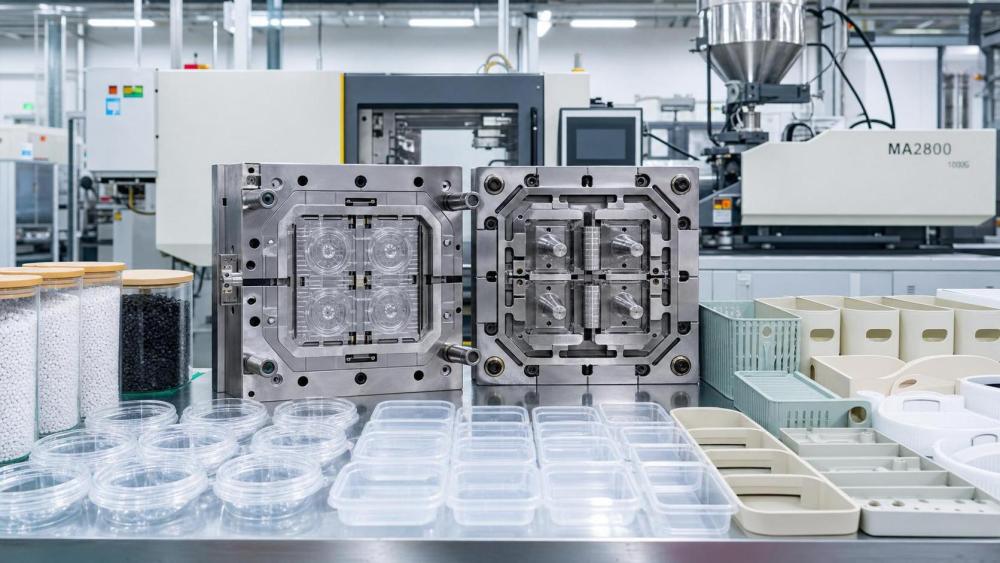
For retail sourcing, injection molding cost is never just a resin price issue.
It is shaped by tooling, part design, cycle speed, scrap risk, and order volume.
That matters even more in housewares, drinkware, storage products, and bathroom hardware accessories.
A low quote can look attractive at first, yet hide expensive problems later.
Common examples include unstable dimensions, slow production, excessive flash, and costly rework.
In practical buying work, understanding retail mold economics improves both negotiation and supplier comparison.
It also helps explain why similar-looking plastic products can have very different landed costs.
This guide breaks down the main injection molding cost drivers in clear business terms.
The goal is simple: make molded product sourcing more predictable and less reactive.
Why Injection Molding Cost Varies So Much
Injection molding cost changes because every part uses a different mix of material, mold structure, and machine time.
Even small design details can shift total economics in a noticeable way.
A deep storage bin, for example, may need a larger press and longer cooling time.
A slim clip or kitchen tool handle may look simple, yet demand precise gating and tight warpage control.
That is why quote comparison should always go beyond unit price.
A better approach is to separate one-time mold expense from recurring production cost.
- One-time cost includes mold design, steel selection, hot runner systems, texturing, and sampling.
- Recurring cost includes resin, machine hours, labor, packaging, scrap, and secondary processing.
- Risk cost includes delays, quality claims, engineering changes, and compliance failures.
When those layers are visible, injection molding decisions become far more commercial and practical.
Material Selection Is the First Major Cost Driver
Material usually drives the biggest visible share of injection molding cost.
But resin choice affects much more than price per kilogram.
It also influences shrinkage, cycle time, strength, clarity, odor, chemical resistance, and compliance.
In consumer products, PP is often cost-efficient and durable for bins, lids, and food containers.
Tritan may cost more, yet supports premium transparency and reusable bottle positioning.
ABS works well for rigid housings, while nylon may be chosen for mechanical strength.
Glass-filled materials can improve stiffness, but they increase mold wear and processing complexity.
That trade-off becomes important in long production programs.
- Lower resin price may mean higher defect rates.
- Premium resin may reduce returns or support better retail positioning.
- Food-contact resin can require FDA or LFGB support documentation.
- Colorants and additives can alter both cost and molding stability.
So, in injection molding economics, the cheapest resin is not always the lowest-cost sourcing choice.
Mold Complexity Often Decides Tooling Economics
Tooling is where many retail projects either gain control or lose it early.
Mold cost rises with part geometry, surface requirements, cavity count, and precision demands.
Undercuts need sliders or lifters.
Threaded closures may need unscrewing mechanisms.
Mirror finish drinkware caps and cosmetic appliance parts need tighter steel finishing and better polishing.
In contrast, hidden internal parts can often use a simpler mold strategy.
This is also where supplier experience matters a lot.
A skilled mold maker may spend more upfront but shorten approval cycles and reduce correction costs.
- Higher cavity count lowers unit cost at scale.
- Higher cavity count also raises tooling investment and balancing requirements.
- Hot runner molds save material waste but increase mold price and maintenance complexity.
- Cold runner molds cost less initially but create more scrap.
In retail mold economics, the right tool is the one that matches forecast volume and product life cycle.
Cycle Time Quietly Drives Unit Cost
Cycle time is one of the most powerful injection molding cost drivers, yet it is often under-discussed in sourcing talks.
Every second matters because machine hours accumulate across the whole order.
Longer cooling time usually means thicker walls, poor heat transfer, or inefficient part design.
Complex ejection can also slow the cycle.
In practical terms, a part that runs at 24 seconds can be much cheaper than one at 34 seconds.
That gap becomes significant over hundreds of thousands of pieces.
This is why design-for-manufacturing review should happen before tooling release.
- Reduce unnecessary wall thickness variation.
- Improve rib and boss design.
- Avoid cosmetic areas that trap heat.
- Check whether texture increases demolding resistance.
These details sound technical, but they directly affect procurement cost control.
Volume Changes the Real Cost Picture
Production volume is the bridge between tooling strategy and unit economics.
Low-volume programs often carry a high mold burden per piece.
High-volume programs can justify stronger steel, more cavities, automation, and hot runner investment.
This is where many buying teams misread supplier quotes.
A supplier may quote a low piece price based on an optimistic volume assumption.
If reorder velocity slows, the economics can deteriorate quickly.
So the smart move is to model several volume scenarios before committing.
Good injection molding sourcing is not about guessing demand.
It is about aligning tooling with realistic sell-through expectations.
Quality, Scrap, and Compliance Also Cost Money
The visible quote rarely captures the full cost of poor quality.
Scrap, regrind limits, sorting labor, and customer complaints can erode margins very quickly.
In food-contact products, compliance mistakes are especially expensive.
Material declarations, migration testing, and traceability systems may add cost, but they reduce business risk.
This matters for storage containers, bottle lids, feeding products, and kitchen accessories.
Bathroom and hardware-related molded parts may also require tighter dimensional consistency.
If a plastic insert fails to fit a metal assembly, the total loss goes beyond the molded component itself.
- Ask for defect rate history on similar products.
- Confirm regrind policy for visible and food-contact parts.
- Review mold maintenance practice and cavity balance control.
- Check whether certification cost is included or quoted separately.
From a retail mold economics view, prevention is usually cheaper than correction.
How to Compare Injection Molding Suppliers More Accurately
A useful supplier review starts with a detailed cost breakdown, not just a total figure.
If two quotes differ sharply, the gap usually comes from hidden assumptions.
Those assumptions may involve resin grade, cavitation, cycle estimate, packaging method, or scrap allowance.
In actual procurement work, the following questions are especially useful.
- What resin grade and approved substitute options are included?
- What cycle time and machine tonnage are assumed?
- How many cavities does the mold use?
- Is the runner recyclable, and under what conditions?
- Which cosmetic standards define acceptance?
- Who owns the mold, and how is maintenance charged?
- What happens if forecast volume changes after launch?
These questions move the conversation from price shopping to cost management.
They also help prevent quote surprises during scaling.
Practical Buying Moves That Lower Total Cost
The best injection molding savings often come before production starts.
Small design and sourcing decisions can protect margin for the full program life.
- Standardize materials across product families where possible.
- Avoid over-engineering hidden features that customers never see.
- Use early DFM review before finalizing retail packaging timelines.
- Match mold steel grade to realistic annual volume.
- Plan for replenishment, not only first-order launch pricing.
- Separate compliance-critical specifications from cosmetic preferences.
More importantly, keep total landed cost in view.
A slightly higher ex-factory price may still be better if it cuts delays, scrap, and claim exposure.
That is often the real difference between a workable quote and a scalable sourcing solution.
Final Takeaway for Better Sourcing Decisions
Injection molding cost drivers are interconnected, not isolated.
Material choice affects processing.
Tool design affects cycle time.
Volume affects whether tooling investment makes sense.
Quality and compliance shape the true commercial outcome.
When these factors are reviewed together, retail mold economics becomes much easier to manage.
The practical next step is to ask suppliers for a clearer injection molding cost structure before approving tooling.
That single move improves quote transparency, reduces sourcing risk, and supports better long-term purchasing decisions.
Recommended News