
Industry News
Curation by industry experts
Hot Articles
Popular Tags
How Thermal Regulation Systems Improve Temperature Stability
How Thermal Regulation Systems Improve Temperature Stability
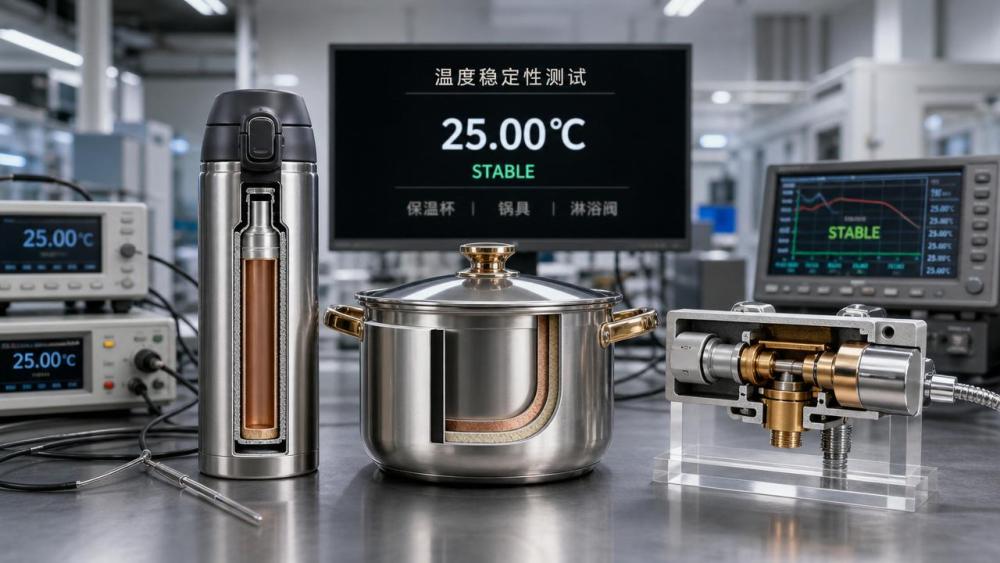
For technical evaluation, temperature stability is rarely a simple comfort feature.
It directly affects safety, repeatability, energy use, and service life.
That is why thermal regulation systems matter across modern housewares and hardware products.
In practical terms, thermal regulation systems control how heat is stored, transferred, limited, or released.
They reduce sudden temperature swings and keep performance closer to the design target.
This matters in insulated drinkware, cookware, thermostatic shower hardware, and smart pet devices.
The same principle applies everywhere: stable temperature supports better outcomes and lower risk.
From a sourcing view, thermal regulation systems also help separate engineered products from commodity alternatives.
That difference becomes more visible when buyers compare lifecycle value instead of only initial cost.
What Thermal Regulation Systems Actually Do
At the core, thermal regulation systems manage heat flow under expected use conditions.
They may slow heat loss, prevent overheating, balance temperature, or respond to user settings.
Different products use different mechanisms, but the performance goal stays similar.
Common thermal regulation systems include vacuum insulation, phase balancing structures, thermostatic valves, sensors, and control circuits.
In stainless steel drinkware, dual-wall vacuum structures limit conduction and convection.
In cookware, multi-layer metal construction spreads heat more evenly across the base and sidewalls.
In bathroom hardware, thermostatic cartridges blend hot and cold water to maintain a safe output.
In pet devices, firmware and sensors may keep water, food, or cleaning cycles within safe thermal limits.
So, when thermal regulation systems are well designed, temperature stability improves in measurable ways.
Why Temperature Stability Is a Technical Advantage
Temperature stability is not just about keeping something hot or cold for longer.
It also improves predictability, which is critical during evaluation and mass production.
A stable thermal profile often reduces material stress, seal fatigue, and user complaints.
More importantly, it helps products stay closer to claims made on packaging or technical sheets.
- It supports user safety by limiting scalding, overheating, or unstable output.
- It improves comfort through consistent touch, flow, or holding temperature.
- It protects materials from repeated expansion and contraction stress.
- It strengthens premium positioning in crowded product categories.
From recent market changes, the stronger signal is rising scrutiny of real-world performance.
That means thermal regulation systems are increasingly evaluated as part of total product engineering.
How Thermal Regulation Systems Work Across Product Categories
Thermal regulation systems are not one-size-fits-all.
Their value depends on material choice, structure, response speed, and the product’s duty cycle.
Insulated Drinkware
In bottles and mugs, thermal regulation systems usually focus on retention and external surface safety.
Vacuum insulation, copper-plated liners, and precision weld integrity reduce heat transfer paths.
A small leak or poor lid seal can quickly reduce temperature stability.
This is why testing should cover both body performance and closure performance.
Stainless Steel Cookware
Cookware needs thermal regulation systems that distribute heat rather than simply trap it.
Tri-ply and clad structures reduce hot spots and improve cooking consistency.
For evaluators, the key question is heat uniformity under realistic burner conditions.
Good temperature stability here translates into better browning, less sticking, and lower distortion risk.
Smart Bathroom Hardware
Thermostatic showers and faucets rely on fast-response thermal regulation systems.
They must react to pressure changes, inlet variation, and user adjustments.
Shape-memory alloys, wax elements, and precision cartridges are common control components.
The real benchmark is stable outlet temperature without delay or dangerous overshoot.
Smart Pet Devices
In pet care products, thermal regulation systems often support electronics and hygiene performance.
Motors, pumps, sensors, and water circulation all create heat management challenges.
Poor temperature stability may shorten component life or affect pet safety.
That makes thermal regulation systems a reliability issue, not only a comfort feature.
Key Evaluation Criteria for Thermal Regulation Systems
In actual sourcing work, thermal regulation systems should be reviewed with a structured checklist.
Looking at one headline claim is rarely enough.
These points help translate technical design into procurement-ready decisions.
They also make supplier comparisons much more objective.
Common Failure Risks and Hidden Trade-Offs
Not all thermal regulation systems deliver stable performance in field use.
Some look strong in lab snapshots but weaken under repeated cycles.
A common issue is overemphasis on one metric while ignoring system balance.
- High insulation may increase weight or reduce cleaning convenience.
- Fast thermal response may create control instability if calibration is weak.
- Low-cost sealing parts may undermine otherwise strong thermal regulation systems.
- Mixed materials may improve heat behavior but complicate compliance review.
This also means technical evaluation should include use-case stress, not only nominal performance.
For many products, the hidden failure point sits at interfaces, joints, valves, or seals.
Testing, Standards, and Supplier Questions
Thermal regulation systems should be evaluated through both performance testing and compliance review.
The exact protocol depends on product category, materials, and market destination.
For food-contact items, temperature performance must align with FDA, LFGB, and material migration expectations.
For sanitary hardware, outlet stability and anti-scald behavior often carry greater weight.
Useful supplier questions usually include:
- What test method verifies temperature stability under repeated use?
- Which component drives the core thermal regulation systems performance?
- How does the product behave after thermal cycling, cleaning, or transport shock?
- Are there failure data for valves, seals, welds, or insulation loss?
- Which certifications or internal controls support consistency across batches?
These questions move the discussion from marketing language to verifiable engineering detail.
How to Make Better Technical Decisions
The best decisions come from matching thermal regulation systems to the real application target.
A premium bottle, a tri-ply pan, and a thermostatic faucet need different evaluation logic.
Still, the decision path can stay simple.
- Define the target temperature window and acceptable fluctuation range.
- Check which thermal regulation systems create that result.
- Review materials, interfaces, and durability under realistic cycles.
- Validate claims with category-specific testing and compliance records.
- Compare total lifecycle value, not only unit price.
In business practice, this approach reduces rework, claim risk, and sourcing uncertainty.
It also makes it easier to identify suppliers with real engineering depth.
When thermal regulation systems are assessed this way, temperature stability becomes a measurable value driver.
That is the practical starting point for stronger product selection, safer performance, and more reliable long-term supply decisions.
Recommended News