
Industry News
Curation by industry experts
Hot Articles
Popular Tags
Does vacuum drinkware innovation really improve heat retention?
For technical evaluators, the short answer is yes, vacuum drinkware innovation can improve heat retention, but only when the innovation changes the physics that actually governs heat loss. Better vacuum formation, lower-emissivity liners, tighter neck geometry, improved lids, and more consistent manufacturing can deliver measurable gains. Cosmetic changes rarely do.
What buyers really want to know
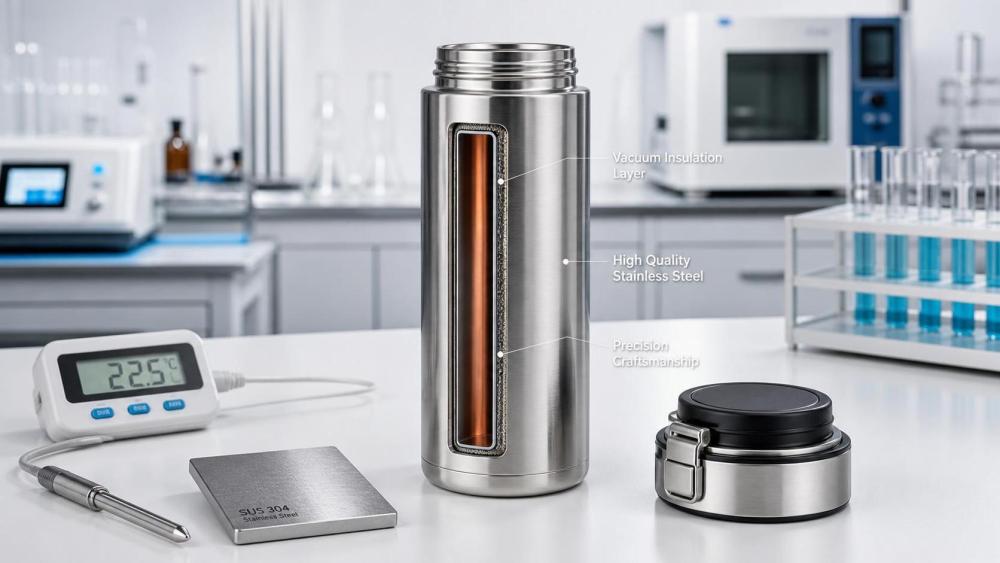
The search intent behind this topic is usually practical: does a newer vacuum bottle, mug, or tumbler keep drinks hot longer than a conventional one, and by how much? Technical readers are not looking for marketing language. They want evidence, test conditions, and the cost-performance tradeoff.
For CHHS readers, that means the real question is not whether vacuum insulation works. It does. The question is which design variables create meaningful retention gains, which ones mainly improve appearance or handling, and which ones introduce new failure risks in production or use.
That distinction matters because many products are sold as “advanced insulation” while the measurable improvement comes from a better lid seal, reduced headspace, or more stable welding quality. Those are valid gains, but they should be attributed correctly when evaluating suppliers or comparing platforms.
What actually drives heat retention
Heat retention in vacuum drinkware is controlled by four main paths: conduction, convection, radiation, and lid leakage. The vacuum space mainly suppresses conduction and convection between inner and outer walls, but it does nothing if the lid allows continuous vapor exchange.
In practice, the biggest performance differences often come from small structural details. A narrower mouth reduces exposed surface area. A better gasket limits vapor escape. A thinner thermal bridge at the neck cuts conductive loss. These are engineering decisions, not slogans.
Radiation also matters, which is why many premium products use copper plating or low-emissivity surface treatment on the outer side of the inner wall. This can reduce radiant heat transfer, but the gain is usually incremental unless the rest of the structure is already well designed.
Material choice matters too. 304 stainless steel is common, while 316 is favored where corrosion resistance or harsher use conditions justify the higher cost. Material grade alone does not determine insulation performance, but it affects durability, corrosion behavior, and long-term sealing stability.
Which innovations create real gains
Not every “innovation” is equally useful. The most meaningful improvements usually come from better vacuum control, cleaner welds, more stable geometry, and improved lid systems. These are the changes that can reduce heat loss in a repeatable way.
Double-seal lids, precision-fit threads, and upgraded silicone gaskets often show stronger user-facing results than changes to the bottle body. That is because the lid is the most vulnerable part of the thermal system, especially during repeated opening and closing.
Manufacturing precision also matters. Uneven wall thickness, weld defects, and microscopic leaks can collapse expected performance. A design that looks advanced on paper may underperform if the vacuum level is inconsistent across batches.
Some brands add phase-change materials, heat-reflective coatings, or multi-layer structures. These can help, but they must be evaluated against added cost, failure complexity, and cleaning burden. A technically elegant feature is not useful if it creates yield loss or weak after-sales reliability.
How much improvement is realistic
In normal consumer use, “improvement” should be measured in hours, not adjectives. A well-executed vacuum bottle may hold hot drinks noticeably longer than a basic unit, but the actual gain depends on fill temperature, ambient temperature, lid behavior, and how often the container is opened.
For technical evaluators, the right benchmark is a controlled thermal-retention test. Compare identical volume, identical liquid temperature, identical environment, and identical opening frequency. Without controlled conditions, a 10% claimed gain can easily become noise.
It is also important to separate peak retention from usable retention. A product may keep liquid hot for many hours in a sealed state, yet still feel disappointing in daily use if it cools quickly after repeated sips. That is especially relevant for mugs, tumblers, and office cups.
In sourcing discussions, the best suppliers can explain not only the headline performance number, but also the test method behind it. If they cannot state the ambient temperature, fill volume, lid type, and measurement interval, the claimed result is not decision-grade data.
Where innovation can mislead buyers
One common mistake is overvaluing body construction while ignoring the closure system. Another is assuming thicker walls mean better insulation. In vacuum drinkware, wall thickness alone is not a reliable indicator of performance and can even worsen weight and cost efficiency.
Marketing claims also blur the line between “feels premium” and “retains heat better.” Powder coating, matte finishes, and decorative textures may improve grip or brand appeal, but they do not automatically improve thermal performance.
There is also a production risk angle. More complex structures can increase scrap, extend cycle time, and make vacuum integrity harder to maintain. For private-label buyers and manufacturers, that can reduce margin without delivering enough consumer benefit.
Durability under real use matters just as much. Repeated drops, dishwasher exposure, gasket aging, and thread wear can all reduce long-term retention. A product that tests well on day one but degrades quickly is a weak platform for scale.
How technical evaluators should judge a product
Start with the test protocol, not the brochure. Ask how retention was measured, what standard was used, and whether the lid remained closed throughout the test. A serious product team should be able to answer that immediately.
Then inspect the design stack: vacuum quality, neck geometry, coating or plating, lid seal, material grade, and batch consistency. A strong result usually comes from aligned details, not one dramatic feature.
Next review manufacturability. Can the design be welded consistently? Is the finish stable at volume? Are gasket tolerances controlled? Can the supplier maintain performance across tooling cavities and production runs?
Finally, compare the gain against business value. If an added feature improves retention by a small margin but raises cost, defect rate, or lead time, it may not be worth adopting. Technical superiority only matters when it survives commercial reality.
Conclusion
Vacuum drinkware innovation does improve heat retention, but the improvement is only meaningful when it changes the parts of the system that actually lose heat. The most valuable advances are usually in vacuum quality, lid sealing, geometry control, and process consistency.
For technical evaluators, the right conclusion is straightforward: do not buy the label of innovation. Buy the measured result, the test method behind it, and the manufacturing capability that can hold that result at scale.
Recommended News