
Industry News
Curation by industry experts
Hot Articles
Popular Tags
How Plastic Warpage Control Affects Supplier Reliability
How Plastic Warpage Control Affects Supplier Reliability
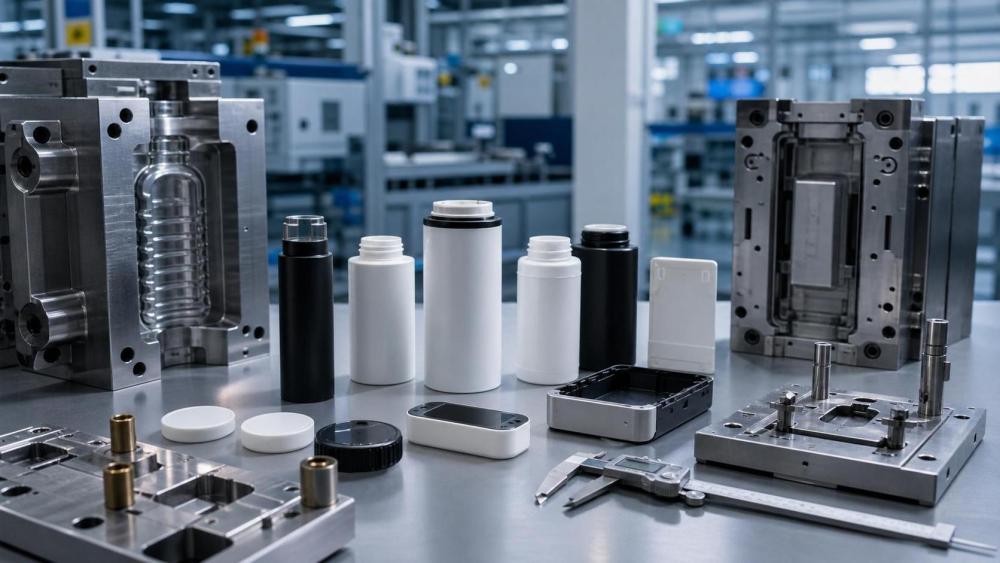
For buyers and sourcing leaders, choosing a strong plastic warpage control supplier is rarely just about part appearance.
It is a practical test of manufacturing discipline, tooling maturity, and process consistency.
In kitchenware, storage products, sanitary hardware, and daily plastic goods, warpage often shows up before larger supply risks become visible.
A lid that twists, a bottle that leans, or a housing that fails assembly usually points to deeper control problems.
That is why plastic warpage control supplier performance should be treated as a sourcing decision factor, not a narrow engineering issue.
From a procurement view, better warpage control supports stable dimensions, smoother downstream assembly, fewer customer complaints, and lower hidden cost.
It also helps separate capable suppliers from factories that only pass samples under ideal conditions.
Why warpage control matters in supplier selection
Plastic warpage is shape distortion after molding, cooling, or ejection.
It may look minor at first, yet it affects fit, stacking, sealing, aesthetics, and packaging efficiency.
For a plastic warpage control supplier, the real challenge is not fixing one bad batch.
The challenge is repeating acceptable geometry across cavities, shifts, seasons, and material lots.
This is where supplier reliability becomes visible.
A reliable supplier controls mold temperature, filling balance, cooling time, holding pressure, resin moisture, and part release conditions.
An unreliable one relies on operator adjustment and short-term trial-and-error.
In actual business, that difference affects lead times, rework rates, and confidence in repeat orders.
What poor warpage control says about a factory
When a supplier struggles with warpage, the signal is usually broader than one defective part.
It can suggest uneven mold cooling, weak gate design, unstable material drying, or limited process validation.
More importantly, it may reveal management gaps.
These gaps often include poor change control, incomplete inspection standards, or weak corrective action discipline.
A plastic warpage control supplier with strong systems usually documents process windows and holds them over time.
That means less dependence on one senior technician and more confidence during scale-up.
This also matters in private-label programs, where color changes, packaging shifts, and seasonal volume swings are common.
If warpage rises whenever production conditions change, the supplier is not truly stable.
Common root causes buyers should recognize
- Unbalanced wall thickness that creates uneven shrinkage.
- Insufficient or inconsistent resin drying, especially with hygroscopic materials.
- Cooling channels that do not remove heat evenly across the mold.
- Packing pressure settings that vary between shifts or machines.
- Tool wear that changes part geometry over longer production runs.
- Part designs that ignore rib layout, gate location, or fiber orientation effects.
A capable plastic warpage control supplier can explain these causes clearly and connect them to preventive action.
How warpage affects total supply cost
The cost of poor warpage control goes far beyond scrap.
Warped products slow assembly lines, increase manual sorting, raise packaging loss, and create return risk in retail channels.
For sanitary fittings or smart device housings, slight distortion can even affect sealing or sensor alignment.
That creates warranty exposure and harder root-cause analysis after shipment.
A stronger plastic warpage control supplier usually protects margin in less obvious ways.
They reduce line stoppage, lower inspection burden, and improve carton density through better dimensional stability.
Over a full program, those gains often matter more than a slightly lower unit price.
This is especially true in high-volume housewares and daily-use categories, where margins are tight and complaint rates spread quickly.
Hidden cost areas to review
- Extra incoming inspection and sorting labor.
- Delayed assembly due to misfit parts.
- Higher packaging waste from unstable stacking.
- Field returns linked to cosmetic or fit issues.
- Re-tooling or mold modification after launch.
How to evaluate a plastic warpage control supplier
A sourcing review should move beyond sample approval.
The right plastic warpage control supplier should prove repeatability, not just one successful trial.
Recent market shifts make this more important.
Factories are handling more resin substitutions, mixed-volume programs, and faster product refresh cycles.
That means the evaluation process should test both technical control and operational maturity.
Key questions during supplier assessment
- How does the factory define acceptable warpage for each part family?
- What dimensional checks are taken after molding and after conditioning time?
- How are mold flow, cooling design, and gate location reviewed before tooling release?
- What happens when resin lot variation changes shrinkage behavior?
- Can the supplier show Cp, Cpk, or other process capability evidence?
- How are machine settings locked and controlled across shifts?
- What corrective actions were taken on past warpage complaints?
A good plastic warpage control supplier answers with records, samples, and process logic.
A weaker supplier stays general and focuses only on finished inspection.
Useful evidence to request
Category-specific signals in housewares and hardware
Different categories reveal warpage in different ways.
That is why a plastic warpage control supplier should be reviewed against the product’s real use condition.
In food storage, lid flatness and sealing contact are critical.
In insulated drinkware accessories, thread alignment and cap fit matter more.
In bathroom hardware trims, visible distortion quickly becomes a retail rejection issue.
For smart pet devices, enclosure stability affects sensor installation and moving-part clearance.
A supplier that understands these category signals is usually easier to scale with.
They connect material choice, mold design, and application performance instead of treating warpage as a cosmetic defect.
Practical sourcing steps before awarding business
A practical decision process should compare suppliers on controllability, not just on quote level.
This becomes more valuable when multiple molds, colorways, or regional launches are planned.
The better plastic warpage control supplier will usually show fewer surprises during commercialization.
- Define functional and cosmetic warpage limits before RFQ release.
- Request dimensional data from pilot runs, not hand-picked samples.
- Review material drying, mold maintenance, and process lock procedures on site.
- Check whether the supplier can manage seasonal humidity and resin lot variation.
- Ask for a contingency plan for tooling adjustment and launch support.
- Include warpage performance in supplier scorecards after mass production starts.
These steps make the conversation more objective.
They also reduce the risk of discovering stability problems after packaging, assembly, or export inspection begins.
Final decision lens
Plastic warpage control is one of the clearest indicators of supplier reliability in molded product sourcing.
It reflects how well a factory manages materials, tooling, process windows, and corrective action.
A qualified plastic warpage control supplier is not simply producing straighter parts.
They are showing that their system can hold quality under real commercial pressure.
For sourcing decisions in housewares, sanitary products, drinkware accessories, and daily plastics, that signal is highly valuable.
It supports better supplier selection, steadier launches, and lower lifetime supply risk.
When comparing vendors, place warpage control beside price, lead time, and compliance readiness.
That decision lens leads to more dependable sourcing outcomes and stronger long-term supplier partnerships.
Recommended News