
Industry News
Curation by industry experts
Hot Articles
Popular Tags
Kitchen Surface Materials Compared: Heat, Stain, and Hygiene
Choosing among kitchen surface materials is rarely a style decision alone. In real kitchens, heat exposure, staining agents, cleaning chemistry, and microbial risk shape long-term performance more than showroom appearance.
That is why kitchen surface materials remain a practical topic across housewares, kitchen systems, and light industrial supply chains. Material choice affects durability, complaint rates, sanitation routines, and even how confidently a product line can be positioned.
For platforms such as CHHS, which connect material safety, kitchenware performance, compliance insight, and sourcing intelligence, this comparison matters because surface behavior links design intent with daily use.
What really matters in kitchen surface performance
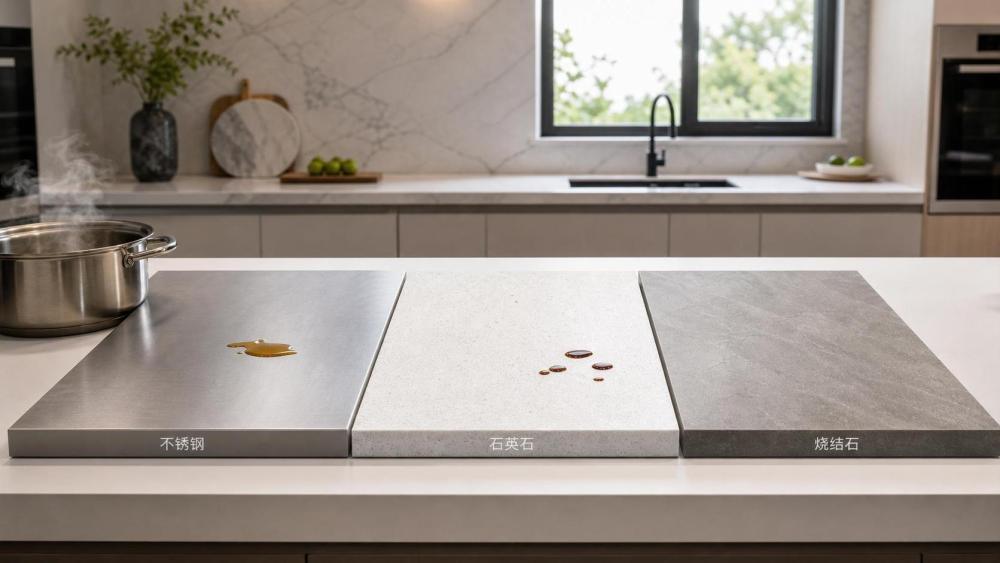
A kitchen surface is judged every day by contact, spills, heat, and cleaning. Technical evaluation therefore starts with three questions: how much heat it tolerates, how easily it stains, and how hygienic it stays over time.
Heat resistance is not only about surviving a hot pan. It also covers thermal shock, discoloration, resin breakdown, edge stability, and whether repeated heating changes the surface structure.
Stain behavior involves absorption, surface porosity, pigment retention, and reaction with acids or oils. A material may look clean after wiping, yet still hold traces of coffee, turmeric, wine, or grease.
Hygiene goes beyond smoothness. Joints, scratches, sealants, and repair marks can become contamination points. In food-contact environments, these details often matter as much as the base material itself.
How major kitchen surface materials compare
Most commercial discussions around kitchen surface materials focus on quartz, granite, stainless steel, solid surface, porcelain, laminate, and sintered stone. Each performs differently under pressure.
The table gives a fast comparison, but specification work should not stop there. Manufacturing quality, surface finish, resin systems, substrate construction, and edge treatment can shift real-world results significantly.
Heat resistance is often misunderstood
Stainless steel and porcelain-based options lead when direct heat is frequent. Commercial-style prep zones, integrated sinks, and heavy cooking environments usually reward these materials.
Quartz performs well in normal use, yet resin binders can discolor or crack under concentrated heat. A pot taken straight from a burner creates a different risk than warm cookware resting briefly.
Granite handles heat better than many engineered surfaces, but sealers and polished finishes still require attention. Repeated stress near cutouts may create failure points that are not visible at installation.
Laminate and many acrylic solid surfaces are less forgiving. They suit lighter-duty kitchens, display-oriented installations, and projects where appearance uniformity matters more than direct thermal loading.
From an evaluation standpoint, one useful distinction is continuous heat tolerance versus accidental heat tolerance. Marketing claims often blur the difference.
Stain resistance depends on chemistry, not color alone
A pale surface may perform better than a dark one if its structure is denser and less reactive. Stain resistance in kitchen surface materials is primarily a matter of porosity, resin response, and maintenance discipline.
Granite varies widely because the stone itself varies. Some slabs resist staining well after sealing, while others remain vulnerable around oils, colored liquids, or acidic food residues.
Quartz generally offers stable stain resistance in household use. However, harsh cleaners, strong solvents, or prolonged contact with dyes can still affect appearance.
Stainless steel does not absorb stains, but it can show water spotting, rainbow heat tint, or surface marks. These are usually appearance issues rather than structural contamination issues.
Porcelain and sintered stone are strong performers here because their dense surfaces resist pigment penetration. This makes them attractive in kitchens where visual cleanliness is part of brand presentation.
Common staining agents worth testing
- Coffee, tea, and wine for pigment retention
- Turmeric, curry, and tomato for strong food color transfer
- Cooking oil for penetration and cleaning residue
- Vinegar and lemon for acid response
- Bleach or alkaline cleaners for surface compatibility
Hygiene is shaped by surface design as much as material choice
When CHHS covers food-contact materials, stainless steel processing, and compliance logic, the message is consistent: hygiene is a system property. The base surface matters, but so do seams, corners, sealants, and cleaning access.
Stainless steel remains the reference point for many hygienic environments because it is non-porous, durable, and compatible with frequent cleaning. Weld quality and finishing direction are still critical.
Solid surface materials gain ground where seamless integration is valuable. Coved backsplashes and integrated bowls reduce dirt traps, which can outweigh lower heat resistance in certain installations.
Stone-based surfaces can be hygienic when dense and maintained properly, but chipped edges, open pores, or degraded sealers reduce that advantage. Evaluation should include aging, not only launch condition.
Kitchen surface materials should therefore be reviewed as part of a broader cleanability pathway: spill contact, wipe removal, residue retention, detergent response, and post-clean visual inspection.
Where material selection changes by use case
Not every kitchen asks for the same balance. Residential premium projects, compact urban kitchens, hospitality prep zones, and export-ready modular systems emphasize different priorities.
In high-use cooking zones, heat and abrasion often dominate. Around islands and serving areas, stain visibility and surface appearance may rank higher. Around sink areas, hygiene and water behavior move to the front.
This is also where broader housewares knowledge becomes useful. A brand already evaluating stainless steel cookware, food-grade polymers, or compliance protocols often has a stronger framework for kitchen surface materials as well.
A practical evaluation framework
A useful comparison of kitchen surface materials should combine lab-style indicators with use simulation. Datasheets are helpful, but field behavior often reveals what specifications hide.
- Review maximum temperature exposure and thermal shock limits
- Check porosity, sealing needs, and edge vulnerability
- Test with real staining agents and realistic dwell times
- Assess joints, sink integration, and backsplash transitions
- Confirm cleaner compatibility and maintenance burden
- Align findings with food-contact expectations and regional compliance logic
This approach supports more reliable sourcing decisions. It also helps compare materials on lifecycle cost, not just initial quotation.
What to examine next
The strongest material is not always the right one. The better choice is the surface that matches actual heat load, staining exposure, cleaning method, and visual standard across its intended market.
For that reason, kitchen surface materials should be reviewed alongside cookware habits, sink configuration, household chemicals, and after-sales maintenance expectations. Those surrounding conditions often decide success.
A sensible next step is to build a short comparison matrix using the project’s top risks: direct heat, dark food pigments, seam hygiene, and acceptable upkeep. Once those criteria are ranked, material selection becomes far clearer.
Recommended News