
Industry News
Curation by industry experts
Hot Articles
Popular Tags
How Drinkware Coating Technology Affects Durability
Drinkware coating technology durability shapes how a bottle or tumbler performs long after the first sale. It influences scratch resistance, stain retention, corrosion protection, heat exposure tolerance, and the way a product looks after repeated handling.
In insulated drinkware, coating decisions are tied to stainless steel grades, vacuum construction, food-contact compliance, and brand positioning. That makes surface treatment a practical evaluation topic across sourcing, product development, and quality control.
Why coating durability matters beyond appearance
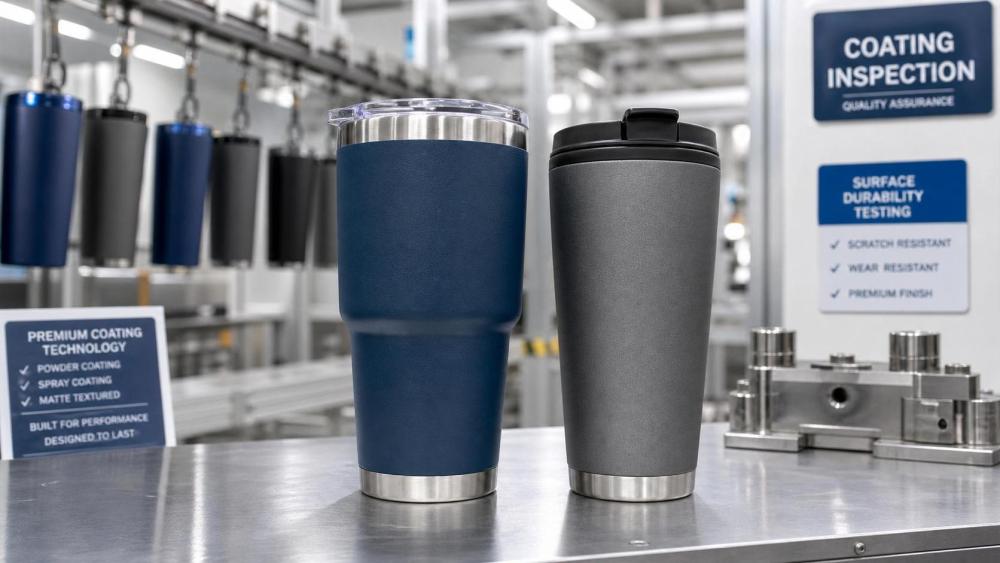
A coating is often treated as an exterior finish, but its role is broader. It helps determine whether drinkware survives daily abrasion, chemical contact, outdoor use, and repeated washing without visible failure.
When drinkware coating technology durability is weak, the first signs are usually cosmetic. Chipping, fading, gloss loss, and edge wear appear early. Soon after, deeper issues may follow, including exposed metal, corrosion points, and customer complaints.
For vacuum bottles and insulated mugs, poor coating performance can also distort perceived product quality. A vessel may still hold temperature well, yet surface failure reduces trust in the overall build.
This is one reason CHHS tracks drinkware alongside cookware, plastics, sanitary hardware, and other daily-use product systems. Surface engineering often sits at the intersection of material safety, manufacturing consistency, and long-term user experience.
What coating technology includes in modern drinkware
In practical terms, coating technology covers more than the top color layer. It includes pretreatment, primer chemistry, coating type, curing method, film thickness, adhesion control, and surface texture.
Common systems include powder coating, spray-applied paint, ceramic-like exterior coatings, UV coatings for specific decorative parts, and specialty finishes designed for soft touch, anti-slip grip, or metallic visual effects.
Performance starts with substrate preparation. Stainless steel surfaces need cleaning, roughening, or conversion treatment before the finish is applied. If pretreatment is inconsistent, even a premium coating may fail early.
This point matters in 304 and 316 stainless steel drinkware alike. Higher alloy quality improves corrosion resistance, but it does not compensate for poor coating adhesion or weak process control.
The main coating options and their durability profile
These categories are useful, but real performance depends on the full process window. A well-controlled standard powder coat may outlast a poorly executed premium finish.
Where durability is won or lost in production
Most failures come from process gaps rather than a single material flaw. Drinkware coating technology durability is strongly affected by a few manufacturing details that are easy to underestimate.
- Surface contamination from oil, fingerprints, polishing residue, or dust
- Incomplete pretreatment before coating application
- Uneven coating thickness around corners, threads, and handles
- Under-curing or over-curing that changes hardness and adhesion
- Poor masking design near lids, seals, logos, or welded areas
- Rough handling during assembly, packing, or transport
In insulated bottles, welding and vacuum sealing add another layer of complexity. Heat from later processes can influence coating stability if the production sequence is not tightly controlled.
This is especially relevant when evaluating matte finishes, textured powder coats, or bottles with large printed graphics. Decorative appeal can increase sensitivity to minor process variation.
The link between coating, stainless steel, and thermal structure
Exterior coating does not create vacuum insulation, but it still interacts with the total product system. Material choice, wall construction, and liner treatment all shape how durable the final vessel feels in real use.
A bottle with 316 stainless steel may offer stronger corrosion resistance in demanding conditions. Yet drinkware coating technology durability still depends on whether the exterior finish bonds correctly to that surface.
Copper-plated vacuum liners, textured bodies, laser-etched branding, and silicone grip zones can also affect surface stress points. Every added feature changes how the coating performs under rubbing, impact, and cleaning.
In category comparison, durability should therefore be assessed as a system property. Looking only at the paint name or finish description gives an incomplete picture.
What real-use conditions reveal
Office tumblers, sports bottles, travel mugs, and outdoor flasks do not fail in the same way. The use environment changes the stress pattern.
Indoor products often face repeated desk contact, cup-holder friction, and hand oils. Outdoor products face impact, sand abrasion, UV exposure, and wider temperature swings.
Dishwasher exposure is another dividing line. Some finishes tolerate manual washing well but degrade faster under alkaline detergents and heat cycles.
How to evaluate drinkware coating technology durability
A useful review combines laboratory data, production evidence, and application context. One source alone is not enough.
Start with adhesion, abrasion, impact, and chemical resistance testing. Then check whether the test methods match the product category and target market claims.
Factory consistency matters as much as test success. Batch records, defect rates, rework patterns, and packaging controls often reveal future field performance better than a single sample does.
Industry signals that deserve closer attention
The market is moving toward finishes that combine durability with cleaner compliance narratives. Low-VOC systems, more traceable coating inputs, and clearer food-contact documentation are becoming part of product positioning.
At the same time, demand for premium textures is increasing. Matte powder coats, stone-like effects, and tactile finishes look strong on shelves, but they need tighter control to maintain drinkware coating technology durability at scale.
This mirrors what CHHS observes across broader housewares categories. Whether the product is cookware, plastic storage, sanitary hardware, or insulated drinkware, surface performance is increasingly tied to compliance visibility and production discipline.
A practical way to move from comparison to decision
A strong review process starts by matching coating claims to actual use conditions. A commuter tumbler, a gym bottle, and a gifting product may need different finish priorities.
Then compare four things together: substrate quality, coating system, process control, and compliance support. Looking at only color, texture, or price usually hides the real durability story.
It also helps to request worn samples, not only perfect launch samples. Edge wear, base scuffing, logo clarity, and cleaning response provide a more reliable view of drinkware coating technology durability.
For the next step, build a comparison sheet around expected use, test evidence, defect risk, and finish stability over time. That creates a clearer basis for sourcing, specification refinement, or product line upgrades.
Recommended News