
Industry News
Curation by industry experts
Hot Articles
Popular Tags
Kitchen Utensil Materials: Safety and Heat Limits
Kitchen utensil materials shape more than appearance or cost. They determine how tools behave under heat, how safely they contact food, and how reliably they pass through sourcing, testing, and repeated kitchen use.
That is why material selection now sits at the center of product quality control. In a market where cookware, kitchen tools, drinkware, and molded housewares share supply chains, small material mistakes can create large compliance and safety problems.
For companies tracking food-contact safety, heat limits, and durability, the issue is practical. A spatula that softens too early, a nylon turner that deforms near a pan edge, or a coating that degrades under repeated heating can quickly become a recall risk.
Why Material Choice Matters in Daily Kitchen Tools
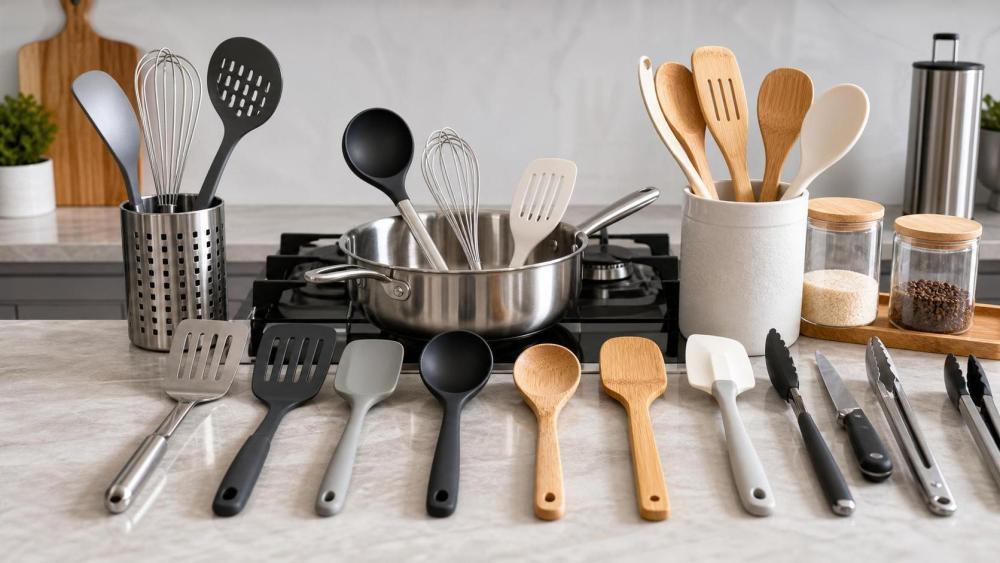
Kitchen utensil materials cover a broad range of products. Spoons, ladles, tongs, peelers, whisks, spatulas, skimmers, and serving tools may look simple, yet each one faces distinct thermal and chemical conditions.
Some tools stay in brief contact with heat. Others rest on pan rims, touch acidic sauces, scrape nonstick surfaces, or cycle through dishwashers hundreds of times. The right material must fit the real use case, not just the design drawing.
This is also why industry platforms such as CHHS keep material behavior in focus. Across stainless steel cookware, silicone kitchen products, food-grade plastics, and compliance topics, the same question appears repeatedly: which material remains stable where consumers actually use it?
Heat Limits Are Not a Single Number
A common sourcing mistake is treating heat resistance as one fixed value. In practice, heat limits depend on temperature, contact time, mechanical load, flame exposure, oil contact, and whether the material is under stress.
For example, a material may tolerate short exposure to 220 degrees Celsius in dry testing, yet warp at a lower temperature while pressing against a hot pan wall. Real performance is usually lower than marketing claims suggest.
This is especially important for blended or reinforced plastics. Fillers can improve rigidity, but they do not always improve thermal aging, edge stability, or food-contact performance after repeated heating and washing.
Typical Ranges Used in Market Screening
The ranges below are directional, not replacement data for product validation.
For kitchen utensil materials, the better question is not “What is the maximum temperature?” It is “Under which exact conditions does the utensil stay dimensionally stable and food-safe?”
Core Material Groups and Their Tradeoffs
Stainless steel remains a preferred option when structural strength and long service life matter. It performs well around hot cookware, resists deformation, and suits many premium kitchen tool categories.
Yet stainless steel is not automatically low risk. Grade selection, chromium and nickel balance, surface polish, passivation, and weld finishing all influence corrosion behavior and food-contact cleanliness.
Silicone is widely used where flexibility and pan-surface protection matter. In well-controlled formulations, it offers strong heat performance. The challenge is variation between true food-grade silicone and lower-grade compounds with excessive filler.
Nylon and other engineering plastics are common in turners, spoons, and tool heads. They help protect nonstick cookware and support high-volume molding. Their weakness is thermal deformation when actual cooking conditions exceed intended design limits.
Wood and bamboo maintain a strong place in serving and cooking tools. They feel natural and do not scratch surfaces easily. Still, moisture absorption, adhesive quality, coating safety, and mold control need attention.
In mixed-material utensils, the interface matters as much as the main body. A safe steel head can fail at the bonded handle, overmolded joint, or rivet zone if thermal cycling loosens the structure.
What the Industry Is Watching More Closely
Current attention has shifted from simple pass or fail claims to lifecycle behavior. Buyers and compliance teams increasingly ask how kitchen utensil materials perform after heating, detergent exposure, oil contact, and long storage.
Migration risk is one major issue. When utensils contact hot food, low-quality additives, pigments, plasticizers, or coating components may move into food under certain conditions. Testing must reflect realistic contact scenarios.
Another concern is hidden quality drift in mass production. A utensil approved in one batch may change if resin origin, filler ratio, curing control, or polishing method shifts later. Material approval without process control is incomplete.
This is where CHHS-style supply chain intelligence becomes useful. It connects food-contact material compliance, injection molding consistency, stainless steel processing quality, and category benchmarking into one practical review framework.
Signals That Deserve Extra Verification
- Very high declared heat limits without test conditions
- Strong odor after first heating or dishwasher cycles
- Visible color change, gloss loss, or tackiness
- Joint loosening in multi-part utensils
- Inconsistent surface finish across production lots
- Missing migration, LFGB, or FDA support documents
How to Evaluate Kitchen Utensil Materials in Practice
A useful review starts with function mapping. Identify where the utensil touches heat, food, oil, steam, and cleaning chemicals. Then match the material to the harshest likely condition, not the average one.
Next, separate structural performance from compliance performance. A tool may pass strength tests and still fail food-contact review. It may also pass migration tests yet soften too early for safe use.
Testing should combine documentation with abuse-oriented validation. That includes repeated heat exposure, dishwasher cycles, staining checks, odor checks, torque or bend tests, and inspection after use simulation.
For molded plastic utensils, pay attention to gate design, wall thickness, sink marks, and shrinkage behavior. For silicone tools, verify compression set, tear resistance, and whether inserts remain secure after thermal cycling.
For stainless steel utensils, assess grade confirmation, burr control, weld cleanliness, and corrosion resistance in salty or acidic conditions. In kitchen utensil materials, workmanship often determines whether a good material performs badly.
A Practical Review Sequence
- Define actual cooking and cleaning exposure
- Match base material to heat and contact profile
- Check food-contact declarations and test scope
- Verify production consistency, not only prototype quality
- Run repeated-use simulation before approval
- Document limits clearly for packaging and user instructions
Where Better Decisions Create Business Value
Stronger decisions on kitchen utensil materials reduce more than complaint rates. They improve product positioning, lower returns, support export readiness, and make supplier discussions more objective.
This matters across the wider housewares sector. The same discipline used in kitchen tools also supports cookware, insulated drinkware, food storage, and other categories where heat, migration, durability, and user trust intersect.
When material logic is clear, product teams can write better specifications. When test conditions are realistic, sourcing teams can compare suppliers more accurately. When heat limits are honest, brands avoid preventable claims.
The next step is usually straightforward: build a short material review matrix for each utensil type, then compare claimed heat resistance, food-contact evidence, process stability, and repeated-use results side by side.
That approach turns kitchen utensil materials from a vague catalog description into a controlled decision. In categories shaped by compliance, durability, and everyday use, that shift is where better outcomes usually begin.
Recommended News