
Industry News
Curation by industry experts
Hot Articles
Popular Tags
Direct-to-Consumer Manufacturing: Margin Gains and Hidden Costs
Why is direct-to-consumer manufacturing getting so much attention?
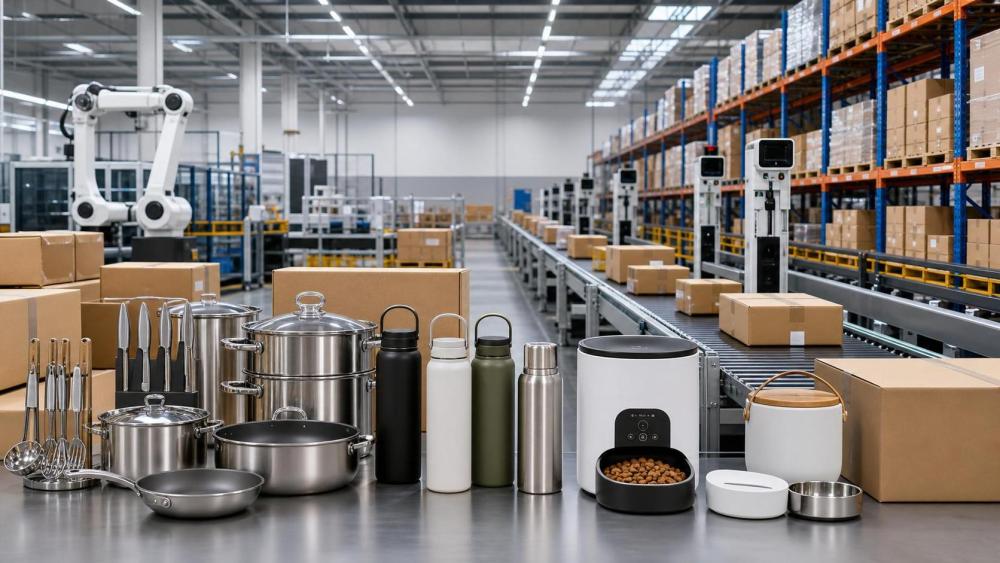
Direct-to-consumer manufacturing attracts attention because it appears to remove layers between factory and buyer. That can improve gross margin, speed launches, and sharpen brand control.
For everyday categories, the appeal is easy to understand. A cookware line, insulated bottle range, smart faucet, or pet feeder can be tested online without waiting for traditional retail shelf cycles.
The model also creates faster feedback loops. Product reviews, return reasons, and repeat purchase behavior often reveal more than distributor summaries or seasonal buyer meetings.
That matters in sectors covered by CHHS, where material safety, usability, and product durability influence repeat demand. Small design details often change conversion rates and complaint levels.
Still, direct-to-consumer manufacturing is not simply a margin shortcut. The same company that gains pricing control may also inherit fulfillment complexity, customer service pressure, and compliance exposure.
A better question is not whether the model is attractive. It is whether the added commercial control outweighs the operational burden for a specific product family.
Where does direct-to-consumer manufacturing create real margin gains?
The strongest margin gains usually appear when products have clear differentiation and manageable shipping economics. Premium kitchen tools, insulated drinkware, storage products, and smart pet devices often fit this profile.
In these categories, brand story and feature explanation matter. A tri-ply pan, 316 stainless steel bottle, or thermostatic shower product may justify a higher selling price when specifications are explained directly.
Direct selling can also reduce markdown dependence. Instead of negotiating retail promotions, companies can use tighter inventory control and adjust offers based on live demand signals.
Another advantage is product mix flexibility. Bundles, seasonal sets, accessory packs, and replacement parts are easier to test in a direct channel than through broadline distribution.
That said, margin gains are more reliable when three conditions are present:
- The product has visible value beyond a generic version.
- Freight, packaging, and return handling stay within acceptable limits.
- The company can maintain steady demand without paying excessive acquisition costs.
For low-complexity private-label items with weak differentiation, direct-to-consumer manufacturing often looks profitable on paper but weakens quickly after marketing and after-sales costs are added.
What hidden costs usually erode the direct model?
This is where many decisions go off course. The visible savings come from fewer intermediaries, but the hidden costs often sit in functions that wholesalers used to absorb.
For housewares and hardware systems, the most common hidden costs are not theoretical. They show up in packaging redesign, parcel damage, customer support, warranty claims, and reverse logistics.
Compliance can also become more expensive. When selling directly across regions, labeling, food-contact declarations, electrical safety documents, or water-use rules may need closer control.
Returns deserve special attention. A consumer may return a vacuum bottle for cosmetic issues that a retail buyer would never escalate. That changes quality thresholds and inspection workload.
The table below helps frame where direct-to-consumer manufacturing gains and where it often leaks profit.
In practice, direct-to-consumer manufacturing works best when these cost lines are modeled before launch, not discovered after revenue starts coming in.
Which products are better suited to this model, and which ones struggle?
Product fit matters more than channel enthusiasm. Some categories naturally support direct-to-consumer manufacturing because value can be explained clearly and shipped efficiently.
Examples with stronger fit often include insulated mugs, premium lunch containers, modular storage items, specialty knives, and connected pet products with replacement consumables.
These products usually benefit from visual storytelling, specification detail, and ongoing user engagement. They may also produce follow-on sales through accessories, filters, lids, or refill components.
By contrast, products can struggle when they are bulky, fragile, installation-heavy, or easily compared on price alone. Large sanitary ware items and low-differentiation plastic goods often face this pressure.
A simple way to judge fit is to ask four questions:
- Can the value proposition be understood within one product page?
- Will parcel delivery preserve product condition and perceived quality?
- Is the return rate likely to stay commercially tolerable?
- Can demand scale without undermining production stability?
This is also where sector intelligence helps. CHHS-style category analysis is useful because product success depends on materials, compliance, performance claims, and factory process realities.
How should companies compare direct-to-consumer manufacturing with wholesale or hybrid channels?
The choice is rarely absolute. Many of the strongest businesses use direct-to-consumer manufacturing as one channel inside a broader go-to-market structure.
A hybrid model can reduce risk. Direct channels generate data and protect brand presentation, while wholesale channels contribute volume, visibility, and regional distribution efficiency.
Channel conflict becomes the real issue. If a direct price undercuts distribution partners, the short-term gain may weaken long-term market access.
A more balanced comparison usually looks at the full economics, not only unit margin. Consider this decision frame:
For many categories, the answer is not direct versus wholesale. It is which products deserve direct-to-consumer manufacturing and which ones should stay in conventional channels.
What should be checked before committing budget to direct-to-consumer manufacturing?
Before committing budget, build a simple operating model around contribution margin, not headline margin. That means including packaging, parcel freight, returns, platform fees, support labor, and promotional spend.
Next, pressure-test quality expectations. Consumer channels expose cosmetic defects, minor leakage, unstable app pairing, and damaged packaging far faster than bulk distribution channels do.
It is also worth checking regulatory readiness. Food-contact items, drinkware, sanitary fittings, and smart devices all carry specific documentation and claim-management risks.
A practical pre-launch checklist often includes:
- Verified landed cost by market, including return assumptions.
- Packaging validated for parcel handling, not only pallet transport.
- Clear compliance files for materials, labeling, and claims.
- Customer service process for defects, spare parts, and refunds.
- Channel rules that prevent internal price conflict.
Direct-to-consumer manufacturing can be a strong growth lever. It becomes a weak one when commercial ambition moves faster than operational discipline.
The most reliable next step is to segment the catalog, model real channel economics, and test a limited launch in products where differentiation, compliance readiness, and delivery practicality already align.
Recommended News